During the summer of 2025 I had the opportunity to work for Continental Carbon Company (CCC) as a mechanical engineer intern.
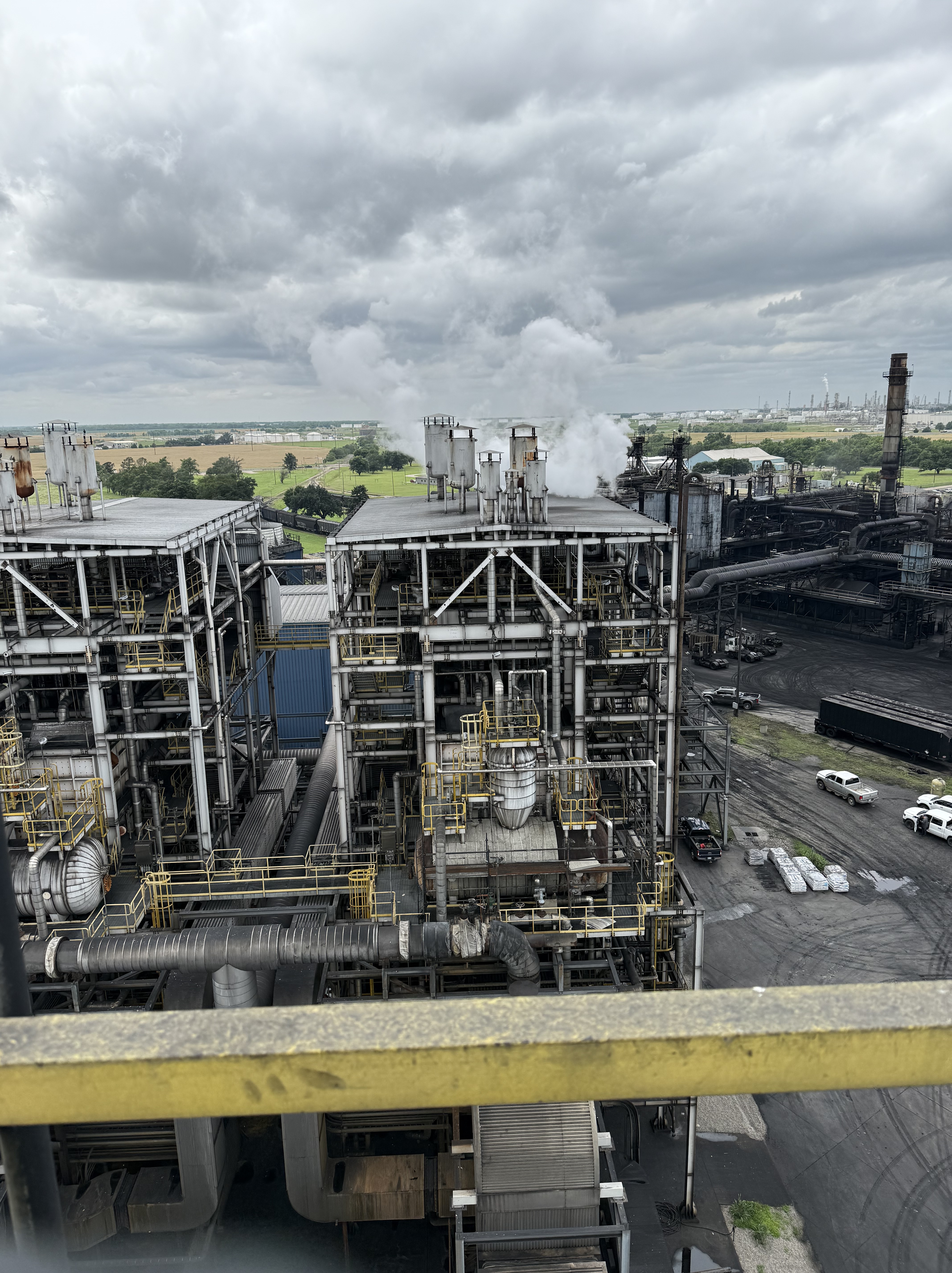
In my first month at CCC, I spent much of my time walking the plant while studying P&IDs and PFDs. CCC is a plant that specializes in the production of carbon black. Carbon black is a black powder made from the incomplete combustion of hydrocarbons. The process involves a reactor, a series of heat exchangers, filters, pelletizers, dryers, and finally storage elevators/tanks. My project was focused on the pelletizer.
The powdery black that leaves the reactor is extremely fine and not suitable for transportation/storage. To address this, the material passes through a pelletizer. The pelletizer sprays the power with a mixture of binder, water, and diesel. After passing through the pelletizer, the material takes the shape of larger pellets that are less powdery and much easier to transport and store.
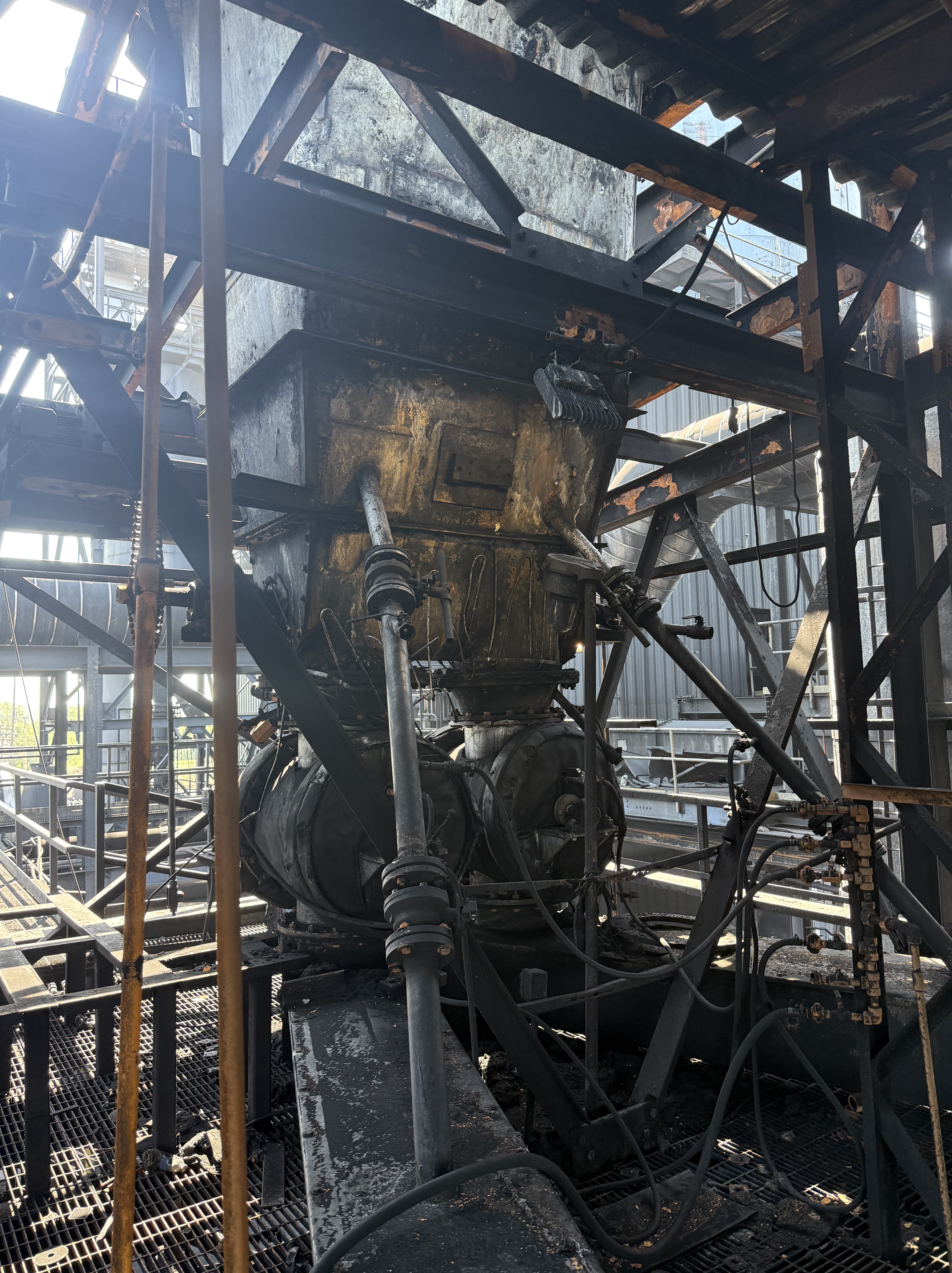
One issue that is being tackled at CCC is the unpredictable flow of material being seen by the pelletizer. There is an accumulator tank / rotary airlock system directly before the pelletizer to act as a buffer, however material swing is still making it through. My task was to address material swing origin and propose a solution to combat the surges of material.
To begin my project, I first did analysis on accumulator tank size and rotary airlock capacity and found them to be sufficient. Next, I addressed material swing origin. Looking at historical plant data, there is a surge in material every 2 hours along with a pressure spike. This lines up with a procedure done called “line work”. Line work is done roughly every 2 hours where air is introduced into to the system. This is a way of clearing any settled material from the lines. Finally, I began studying why the flow was not being controlled and how to improve this process. After doing the thermal expansion calculations for the airlock and its housing, I found that the clearance was a potential issue. The clearance was sufficient cold, but at the high heats involved with the process, the clearance became too large and performed poorly at restricting flow. For my proposal, I suggested either replacing the airlock with a more suitable option or investing in insulation. Additionally, I suggested implementing automated controls. Currently the airlock is operated manually by operators and changed as needed. There are measuring devices already in place that could monitor the material flow and adjust the RPM accordingly. I used plant data and wrote basic logic for a controller that would scale the RPM.
 Chase Allensworth - Mechanical Engineer Portfolio